

OVC Training and Technical Assistance Center Recorded Webinars
Location
Online
Event Type
Webinar

Official websites use .gov
A .gov website belongs to an official government organization in the United States.
Secure .gov websites use HTTPS
A lock (
) or https:// means you’ve safely connected to the .gov website. Share sensitive information only on official, secure websites.


This ASL hotline offers help to Deaf survivors of domestic violence and sexual assault. Trained advocates are available to provide culturally sensitive crisis intervention, education, information, and referrals to local services for Deaf survivors. Contact the hotline via video phone at 855-812-1001, email at [email protected], or live chat.
Hear from Federal Government representatives, researchers, and service providers about how COVID-19 has impacted the occurrence of domestic violence across the country as they cover—
OVC and the Office on Violence Against Women hosted this webinar on Friday, October 29, 2021.
See the YouTube Terms of Service and Google Privacy Policy
I Am Malik tells the story of what happens to a young boy named Malik after he becomes a witness to and victim of a criminal incident involving his neighbor.
To illustrate common occurrences in criminal cases in which a child is a victim or witness, the story follows Malik as he talks to a counselor at school, goes...
Use these materials with children and youth who may have involvement with family and dependency court as the victim of or witness to a crime. The materials teach children about how the child welfare system works, what their rights are, and how they can cope with the difficult feelings they might have during the process.
Character booklets about court roles...
Brave Maya tells the story of what happens to a little girl named Maya after caseworkers visit her home.
To illustrate the common occurrences in child welfare cases, the story follows Maya as she meets with caseworkers, goes to court and meets her advocate, engages with a counselor, and receives support from external family members.
Throughout the...
Who’s That? In Criminal Court—a complementary piece to There’s More to Me—is a brief guide that explains the different roles of people that youth may interact with or hear about throughout their criminal case and in criminal court. It includes practical tips for preparing for court and information on some rights to which children are entitled.
Children are some of the most vulnerable members of our society and are widely held as needing greater care and protection. However, despite this, children are frequently victims of or witnesses to violence, abuse, and other crimes, including domestic violence, community violence, physical assault, sexual assault, commercial sexual exploitation, and child maltreatment.
Resulting from these high rates of exposure to violence, crime, and abuse...
I Am Still Isabella tells the story of what happens to Isabella after she is removed from her home and placed with another caregiver, her auntie.
To illustrate common occurrences in cases of child removal, the story follows Isabella as she adjusts to life in her new home, regularly meets with her caseworker and counselor and discusses...
These materials were specifically designed to appeal to children ages 12–18.
The goal of these materials is to provide effective, trauma-informed, developmentally appropriate information and support to children in a way that they can more easily understand, so they can feel informed, supported, and empowered.
Learn more and view the guides below.
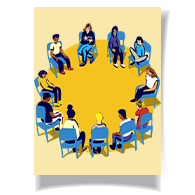
This guide, designed for practitioners...
These materials were designed for youth aged 12−18 who have experienced sex and labor trafficking, to help inform and empower them as they navigate through the justice system.
Funded by the Office for Victims of Crime (OVC), these materials were created with the input of those with similar lived experiences, and expert practitioners working in the anti-trafficking field.
While the materials...
Who’s That? In Family or Dependency Court—a complementary piece to It’s Not Just You—is a brief guide that explains the different roles of people that a teenager may interact with or hear about throughout their child welfare case and in family or dependency court. It includes practical tips for preparing for court and information on some...
Maya’s Homes—a companion piece to Brave Maya—tells the story of what happens to Maya after she is removed from her home and placed with another caregiver, her auntie.
To illustrate common occurrences in cases of child removal, the story follows Maya as she has questions about and adjusts to life in her new home; regularly...
The Center for Court Innovation’s Child Witness Materials Project is a collaborative effort between the Center for Court Innovation, Center for Urban Pedagogy, and Alternate History Comics and is supported by cooperative agreements #2016-VF-GX-K011 and #2018-V3-GX-K069, awarded by the U.S. Department of Justice, Office of Justice Programs, Office for Victims of Crime. The opinions, findings, and conclusions or recommendations expressed in these...